
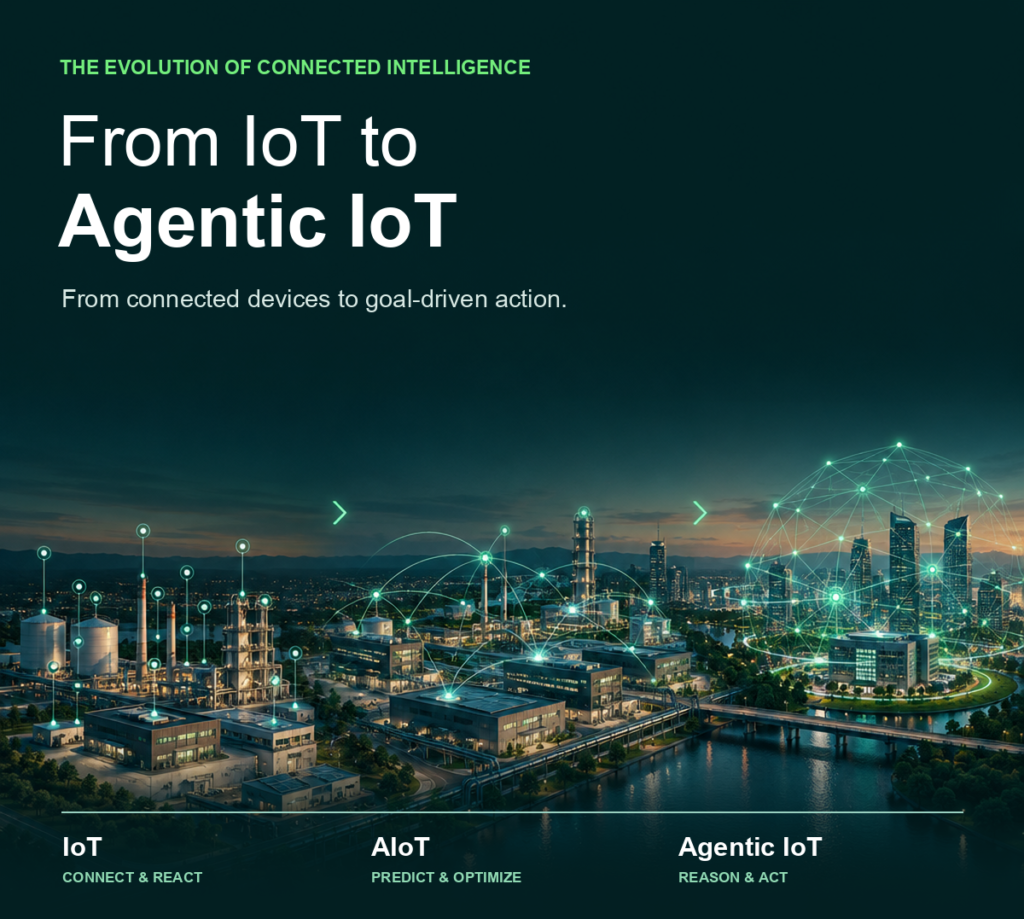
What happens when connected devices don’t just collect data—but help decide what to do next?
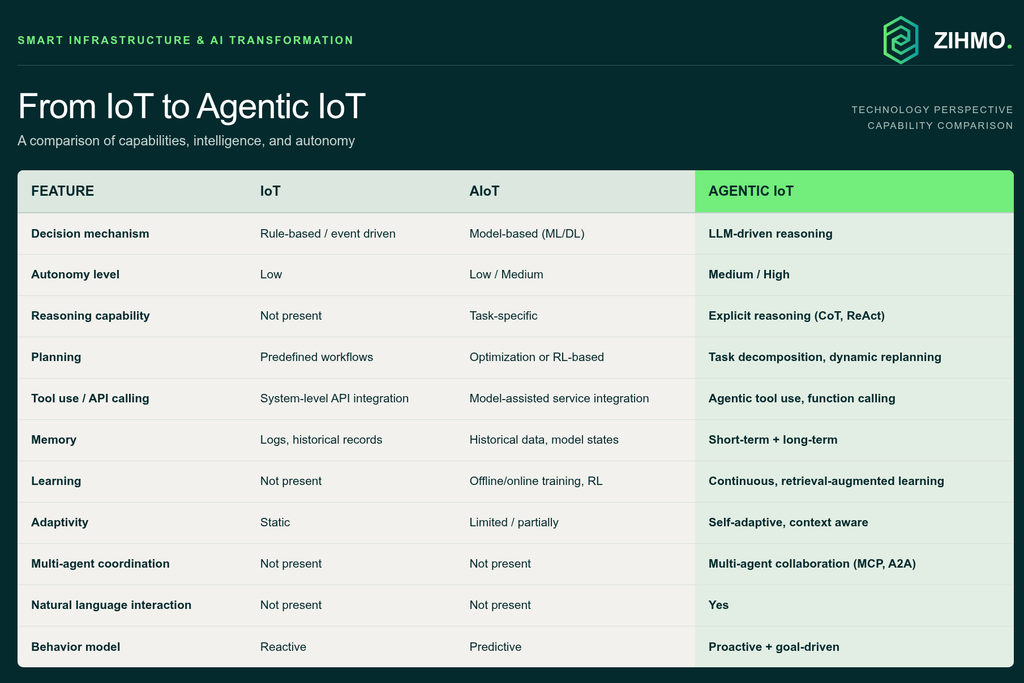
The table highlights an important shift: IoT is evolving from reactive connectivity toward goal-driven intelligence.
1️⃣ IoT: Connect and react
Traditional IoT systems connect devices, collect data, and trigger predefined actions.
A temperature sensor detects overheating. A rule sends an alert. A human decides what happens next.
The value: visibility and automation.
2️⃣ AIoT: Predict and optimize
AIoT adds machine learning to connected devices and data. Instead of simply reporting that a machine is hot, the system can identify patterns that suggest a failure may be coming.
The value: prediction and better decisions.
3️⃣ Agentic IoT: Reason and act
Agentic IoT takes this further. An AI agent can interpret a goal, consider context, use tools, and coordinate actions across systems—with human oversight where needed.
For example, in a factory, an agent might:
- Detect an unusual vibration pattern.
- Check maintenance history and equipment data.
- Assess the urgency and recommend a response.
- Prepare a maintenance request or schedule an inspection, subject to approval.
The value: moving from insights to coordinated action.
Of course, these categories are not rigid. Some IoT systems already support natural-language interfaces or adaptive behavior, and not every agentic system learns continuously. The distinction is better understood as a progression in capabilities—not a set of absolute boundaries.
The opportunity is exciting, but so is the responsibility. As autonomy increases, so does the need for security, clear permissions, auditability, and human control.
The real question isn’t simply, “How intelligent can our devices become?”
It’s: How can we design connected systems that act intelligently—and earn our trust?
What do you see as the biggest opportunity or challenge for Agentic IoT?